
Fastfoot – A Better Way to Form Footings
Fastfoot replaces dimensional lumber with fabric and delivers 8 advantages.
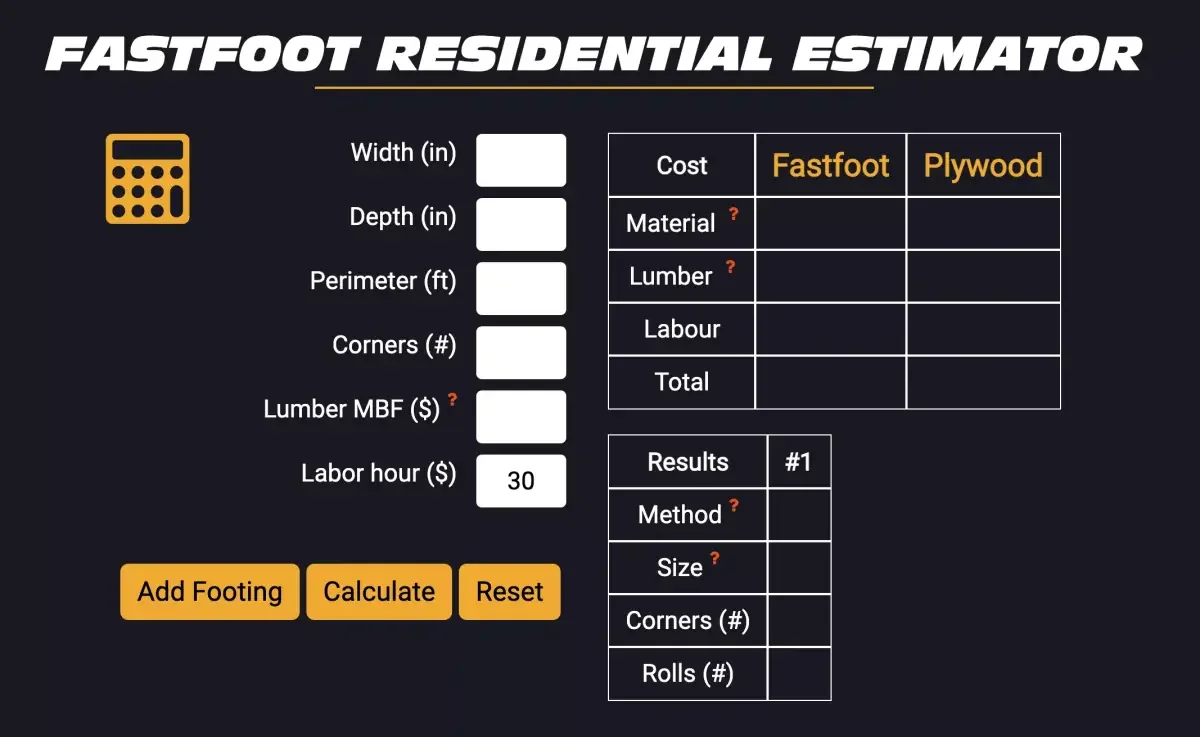
1. It is less expensive than lumber. Go to this link to see the cost comparison:
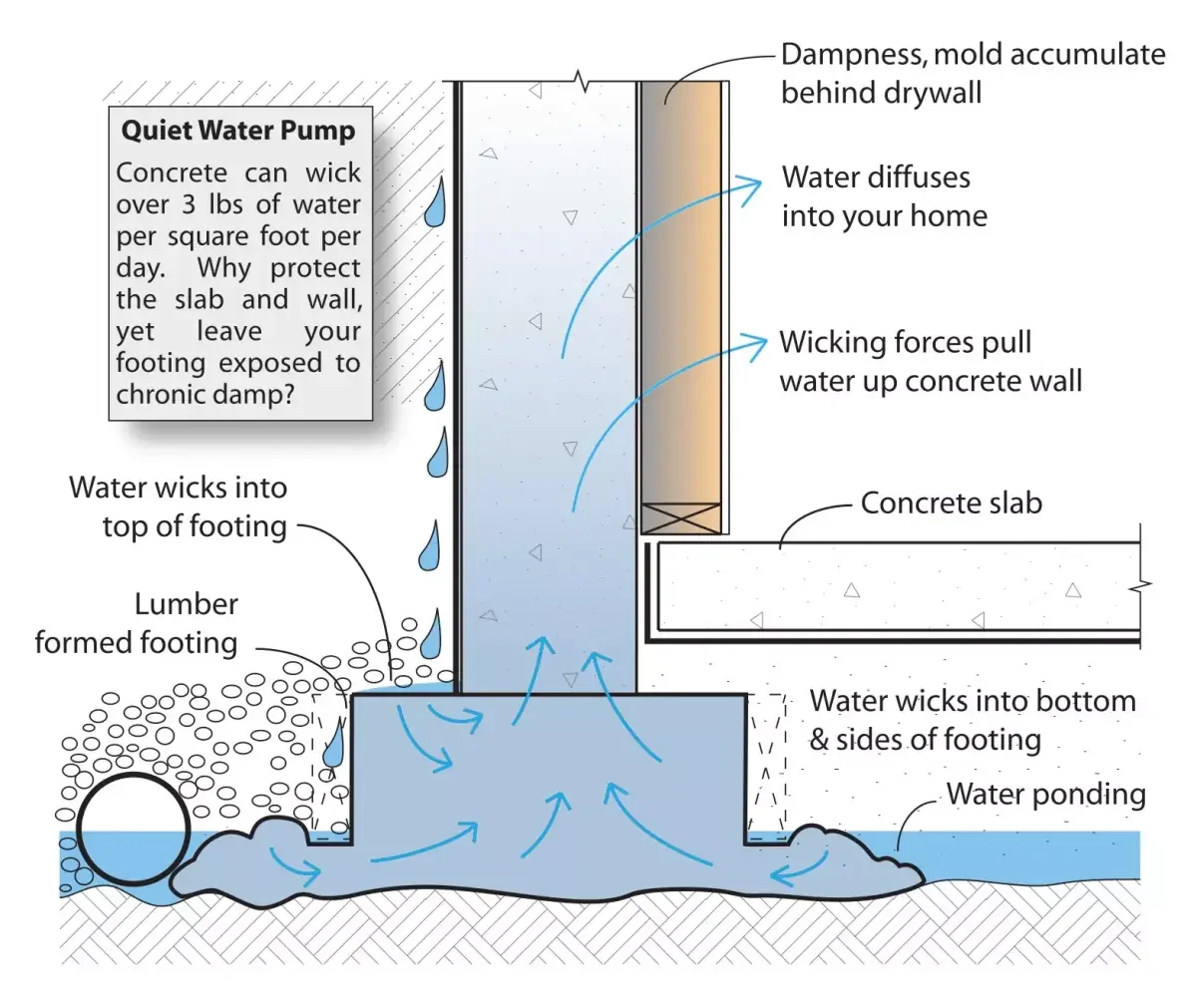
2. Fastfoot stops rising damp through the footing. Rising damp is the wicking of water through the footing into the concrete wall which leads to water evaporation inside the building increasing dampness and mould, especially when the concrete wall is right behind your drywall.
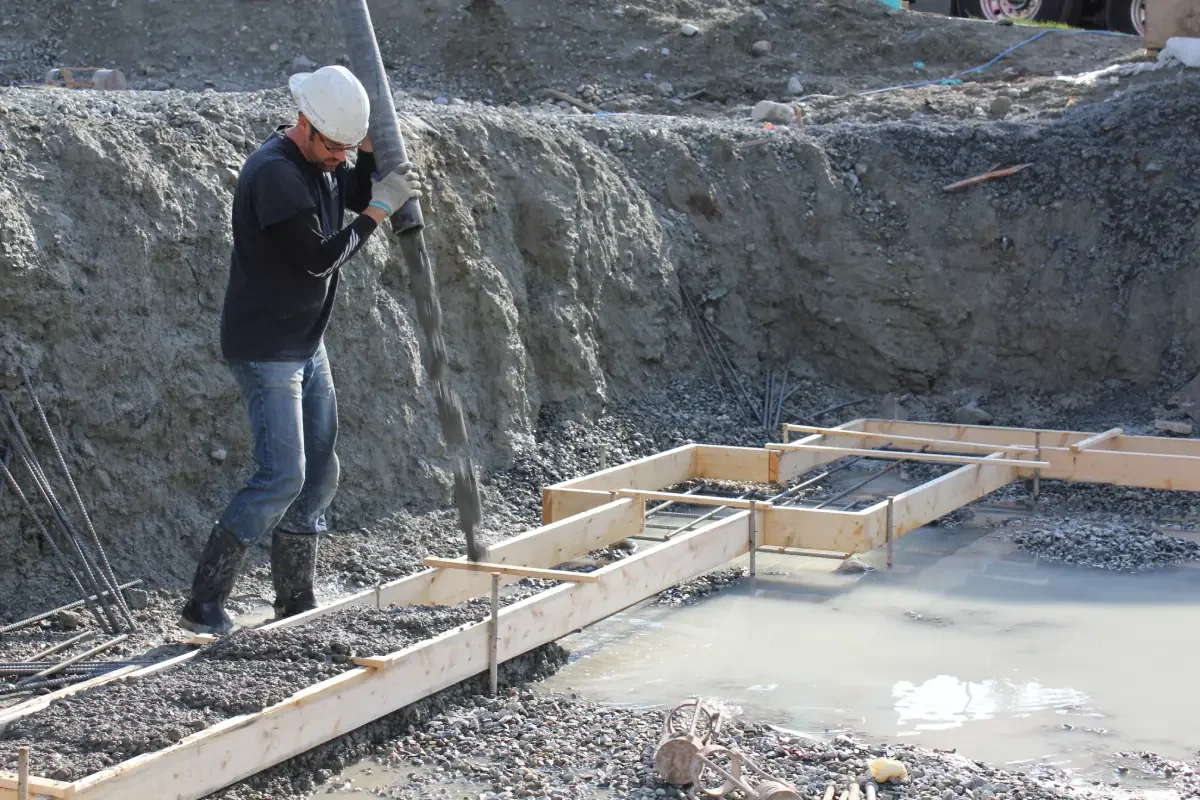
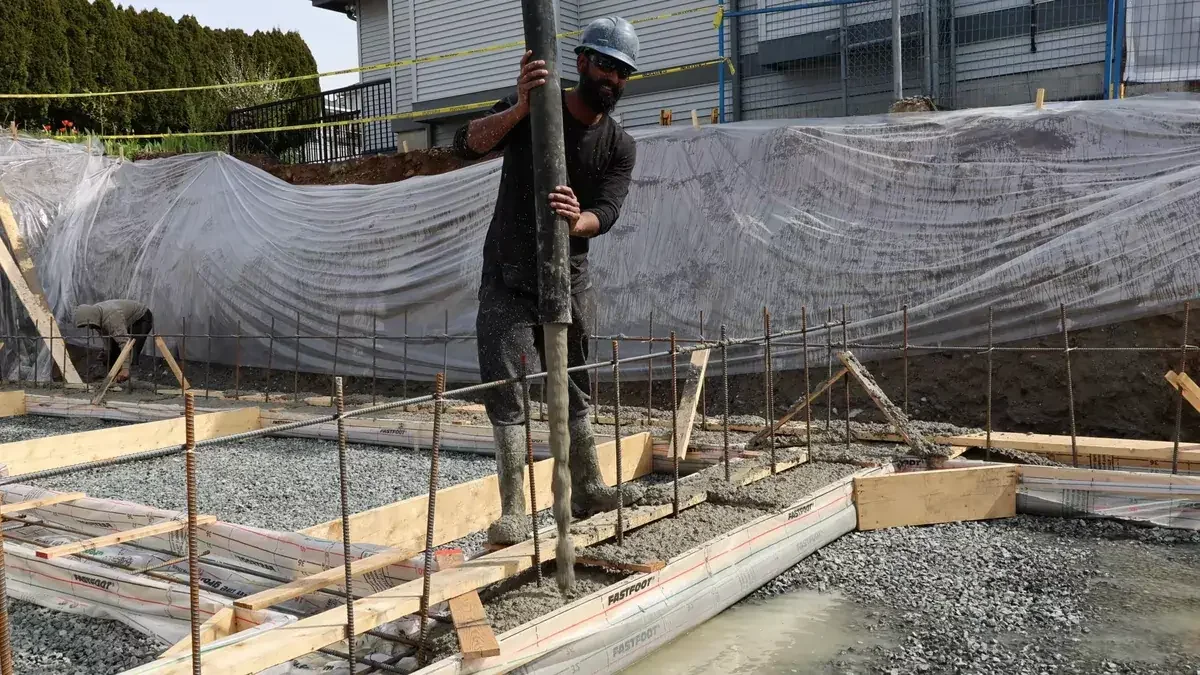
3. With Fastfoot you can use a higher slump concrete. Concrete slump is a measurement of fresh concrete mix’s consistency, workability, and water content. It indicates how easily the concrete flows and can be placed or molded. A higher slump number (ex: 6 inches) means a wetter, more fluid mix while a lower number means a stiffer, drier mix. In this photo, you can see a contractor pouring concrete in a traditional lumber formed footing using a lower slump so that he can stand the concrete in his forms and reduce leakage. This stiffer concrete is difficult to move and more difficult to screed - form a flat surface at the top of the footing form. With Fastfoot you can use a higher slump concrete, without form leakage, and you can easily move and screed.
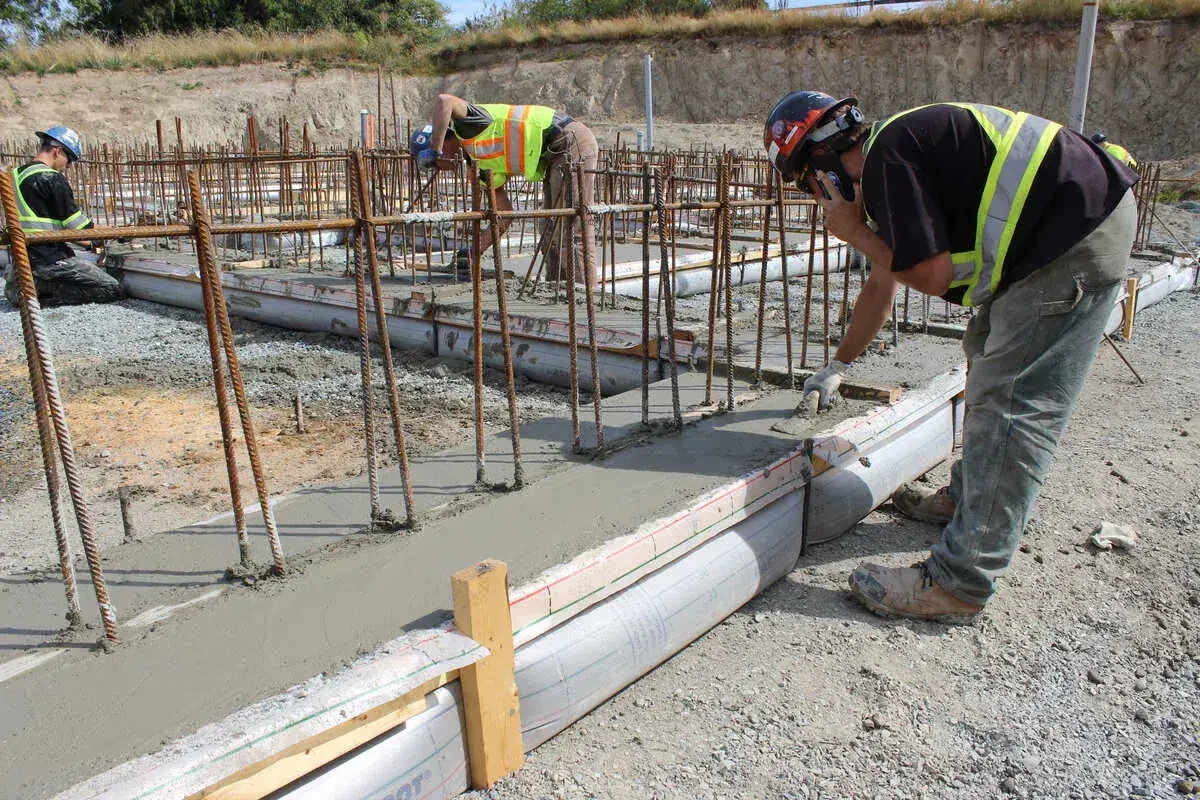
4. Using Fastfoot prevents concrete damage to lumber. As Fastfoot is a closed form there is no damage to footing boards and stakes which means your dimensional lumber used to help form the footing with Fastfoot can be re-used indefinitely.
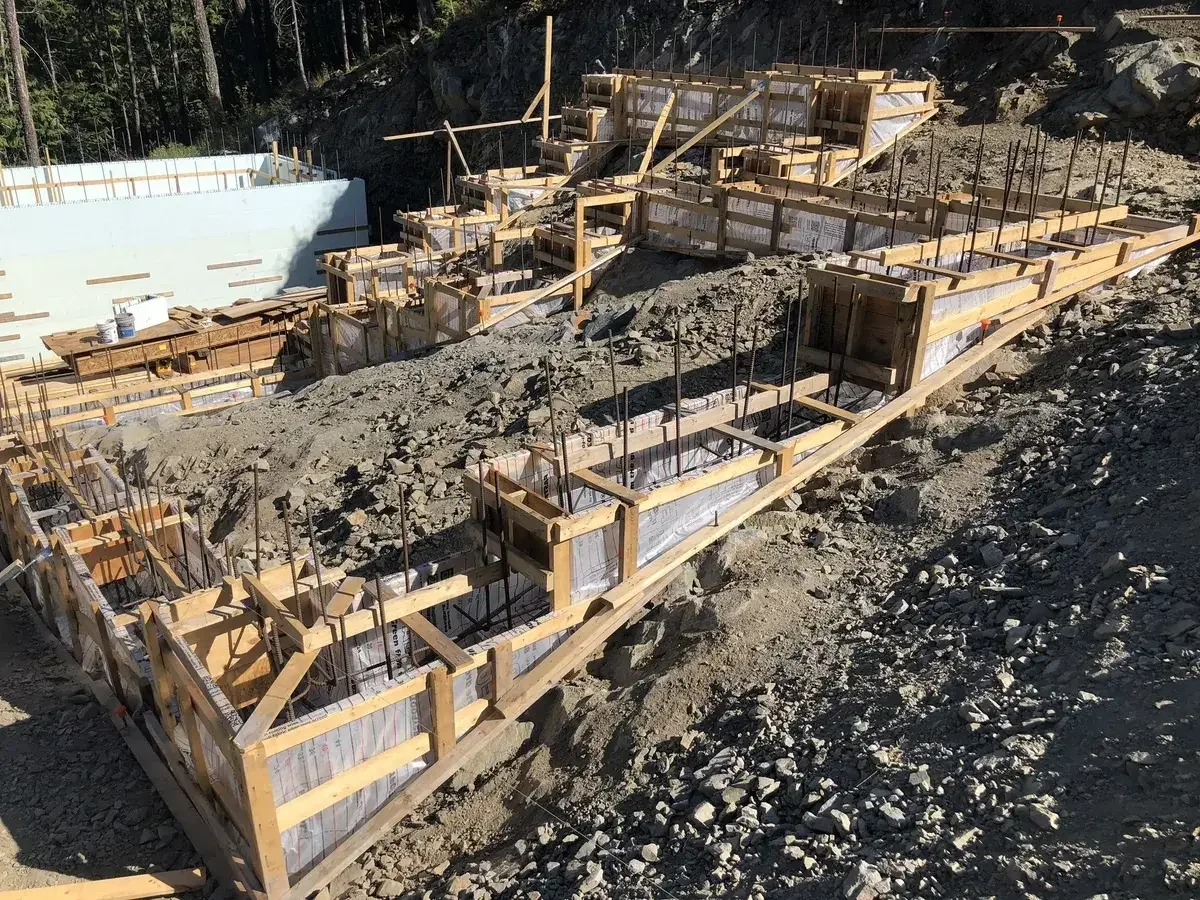
5. Fastfoot adapts to uneven ground and bedrock and is ideal for deep stepped footings. There are special coloured width lines on the Fastfoot so that it can be let out or pulled in to accommodate uneven excavations. There is no need to scab (to form out extra pieces of lumber to extend the footing to accommodate the change in depth). See how the Fastfoot forms and steps over steep areas of rock, and how it can form deep footings in this photo.
6. Fastfoot prevents ground water contamination. Since Fastfoot is a closed form it prevents cement fines from entering the water table.
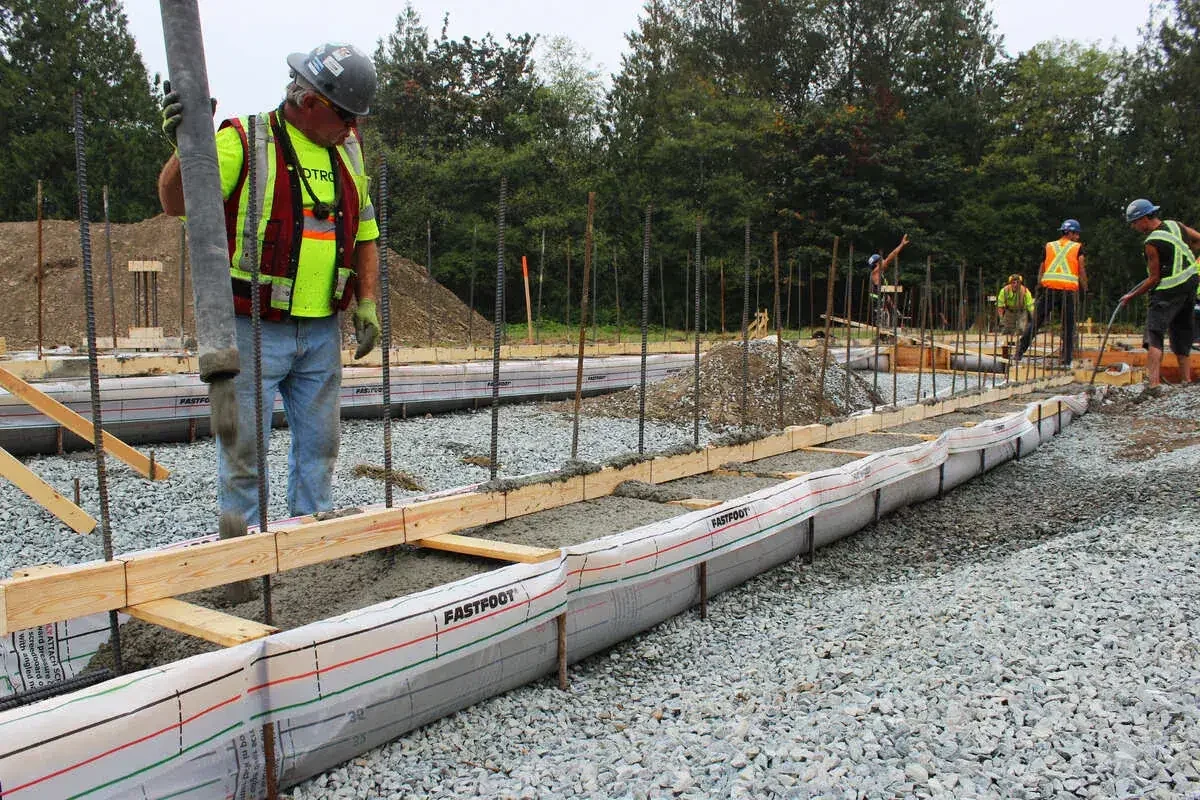
7. Fastfoot prevents the footing concrete from being contaminated by mud and water, leading to a stronger concrete. In addition, in the warmer months, Fastfoot prevents rapid evaporation of moisture in the sides and bottom of the footing. This ensures adequate moisture for proper hydration of the cement particles.
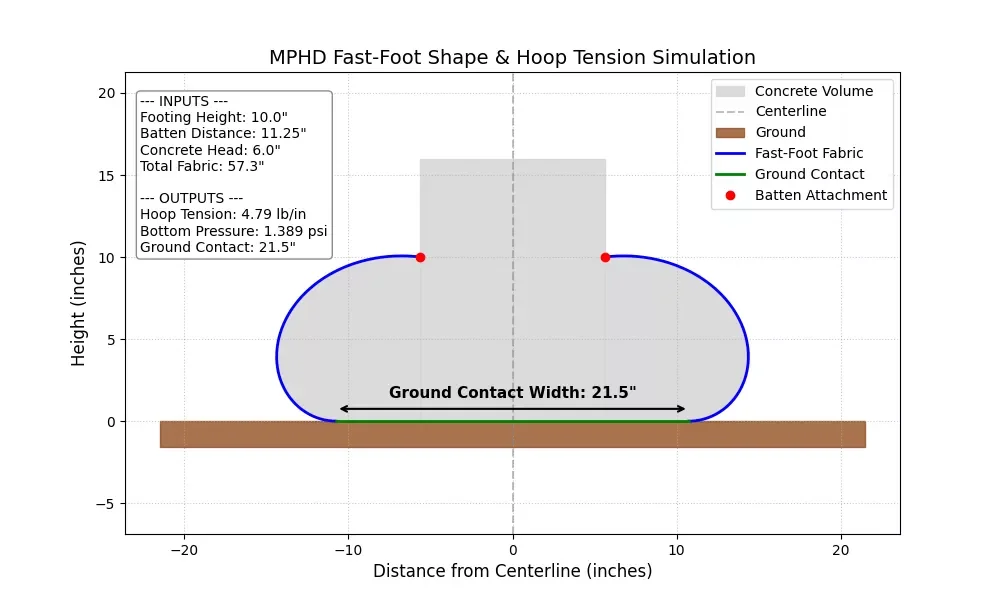
8. The fabric bulge is a feature, not a flaw. Fastfoot’s characteristic outward bulge increases the cross-sectional bearing area compared to a rectangular lumber form of the same width. When the concrete bears down on the fabric all pressure resolves into tensile (hoop) stress along the weave of the fabric. The fabric never bends, shears, or buckles the way lumber does. In addition to lumber and plywood forms, other concrete forms are made of aluminum or steel, and even the concrete pressure behind these rigid forms generates tension forces on the outside layer and compressive loads on the inside. These concrete pressures are then transferred to the intermediate ties and form edges. Fastfoot on the other hand is extremely thin and all the concrete pressure is induced into the fabric itself, delivering this hoop tension.
Information gather from: https://fab-form.com/en/fastfoot-residential/overview